Sora Is Dead: 10M Users Flock to These 5 AI Video Alternatives
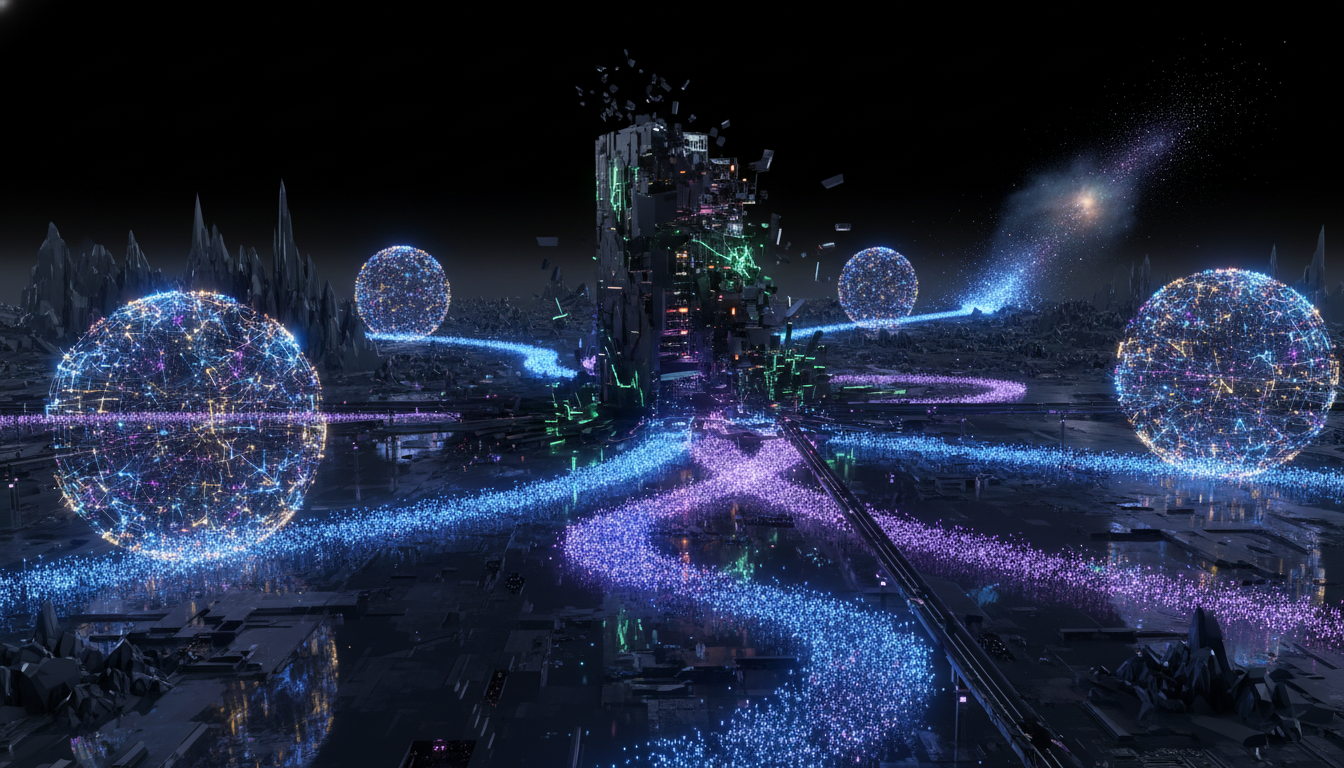
OpenAI shuttered Sora, and rival AI video platforms are racing to absorb the exodus. Kling, Runway, Vidu, and a surprise birthday launch from Higgsfield are reshaping the market overnight.
The AI video generation market just got its biggest shakeup of 2026. OpenAI confirmed it's shutting down Sora, its text-to-video model — and the fallout is already measurable. Rival platforms including Kling AI, RunwayML, and Vidu have all reported significant user gains within a single week.
This isn't speculation. It's a land grab, and it's happening right now.
The Sora Exodus: Who's Winning the User Migration
When OpenAI announced Sora's discontinuation, the immediate question was obvious: where do millions of creators go next?
The answer, according to early data, is everywhere.
Kling AI, RunwayML, and Vidu have all seen measurable user gains in the days following the announcement. But the real story isn't just about absorbing Sora refugees — it's about which platforms are ready to offer something Sora never could.

The competitive landscape has shifted from "who can generate a video from text" to "who can build a complete production pipeline." Sora was a research demo that never fully matured into a production tool. Its successors are skipping that phase entirely.
Higgsfield's Perfectly Timed Birthday Launch
Into this vacuum steps Higgsfield, which chose today — its own anniversary — to launch Cinema Studio 3.0 with Seedance 2.0 integration. The timing is either brilliantly strategic or spectacularly lucky.
What makes this launch noteworthy isn't just the timing. It's the scope. Cinema Studio 3.0 isn't a single model — it's a full production suite that bundles video generation, joint audio-video synthesis, and image-to-video control into one workflow.

The Seedance 2.0 model powering Cinema Studio 3.0 brings several concrete improvements worth examining:
- Joint audio-video generation: Audio is synthesized natively alongside the video, not bolted on in post. This eliminates the lip-sync and ambient sound mismatches that plague most AI video tools.
- Physics simulation: Object interactions — cloth draping, liquid splashing, hair movement — now follow more physically plausible trajectories. Early demos show noticeably fewer of the "melting objects" artifacts common in competing models.
- Anchor image control: Users can lock a character's appearance across multiple generations, solving the consistency problem that has plagued every tool in the space.
The 65% launch discount is aggressive, and it's clearly designed to pull in Sora refugees while they're still shopping.

Early adopters are already sharing their first results, and the reception has been notably positive — particularly around motion quality.
How the Contenders Actually Compare
With so many platforms vying for displaced creators, here's how the current field stacks up on the features that matter most for production work:
| Feature | Higgsfield 3.0 | Kling AI 2.0 | RunwayML Gen-4 | Vidu 2.0 |
|---|---|---|---|---|
| Native audio sync | Yes | No (post-process) | Limited | No |
| Max resolution | 1080p | 1080p | 4K upscale | 1080p |
| Character consistency | Anchor image | Face lock | Multi-shot | Reference frame |
| Physics realism | Seedance 2.0 engine | Good | Strong | Moderate |
| Pricing (entry) | ~$20/mo (with launch discount) | $8/mo | $15/mo | $10/mo |
| Production workflow | Full suite | Editor only | Full suite | Basic |
Runway remains the most mature option for professional editors who need 4K output and established integrations. Kling is the budget pick with solid quality. Higgsfield is betting that native audio and superior physics will justify a premium. Vidu occupies a middle ground but lacks the workflow tooling of its rivals.
The real differentiator going forward won't be raw generation quality — all of these models produce impressive 10-second clips. It's workflow integration, consistency across shots, and audio that will separate production-ready tools from tech demos.
NVIDIA's Quiet Power Play
While consumer-facing platforms compete for individual creators, NVIDIA is making a different bet entirely. At Runway's AI Summit, the company demonstrated real-time AI video generation targeting advertisers and entertainment studios.

This matters because it signals where the enterprise money is flowing. Individual creator subscriptions at $10-20/month are one market. Real-time AI video for ad production — where a single campaign might generate hundreds of variations — is an entirely different scale of revenue. NVIDIA is positioning its GPU platform as the infrastructure layer that all of these tools will eventually run on, which means it profits regardless of which consumer platform wins.
What This Means for Creators Right Now
If you were a Sora user, here's the practical playbook:
Don't rush into a single platform. Most tools offer free tiers or trial credits. Test your specific use case — product demos, short films, social content — across at least two or three options before committing to a paid plan.
Audio changes everything. Joint audio-video generation is a genuine workflow improvement, not a gimmick. If your content requires sound (and most video content does), prioritize tools that handle it natively rather than forcing you into a separate audio pipeline.
Watch the consistency problem. The ability to maintain character appearance across multiple clips is what separates "cool demo" from "usable production tool." Test multi-shot workflows before evaluating any platform.
Budget for experimentation. The market is moving fast enough that the best tool today may not be the best tool in three months. Avoid annual commitments until the dust settles.
Here's an example of what current AI video generation can achieve with the right prompting — cinematic framing, emotional storytelling, and consistent character rendering in a single output:
Generated with VO3 AI — Emotional gut punch: crow brings a meaningful gift to a grieving elderly birdwatcher
And here's a split-composition example demonstrating precise scene control and lighting transitions — the kind of directed output that was nearly impossible with first-generation tools:
Generated with VO3 AI — Before/After: copy-pasting AI output vs the satisfaction of writing your own words
Try It Yourself
The best way to understand where AI video stands in April 2026 is to generate something yourself. VO3 AI lets you experiment with Veo3-powered video generation — test cinematic prompts, try different aspect ratios, and see how far physics simulation and character consistency have come since the Sora era. No production suite replaces hands-on experimentation, and the barrier to entry has never been lower.
Ready to Create Your First AI Video?
Join thousands of creators worldwide using VO3 AI Video Generator to transform their ideas into stunning videos.
📚 Related Posts:
What is VO3 AI Video Generator: The Ultimate AI-Powered Video Creation Platform
Discover VO3 AI Video Generator - the revolutionary AI video creation platform
Read More →VO3 AI vs. Veo3 — What's the Difference?
Understand the key differences between VO3 AI and Google's Veo3
Read More →How to Use VO3 AI Video Generator: Complete Guide
Master VO3 AI Video Generator with our comprehensive tutorial
Read More →VO3 AI Video Generator - Where imagination meets innovation
Built on top of multiple AI video models including Veo3. Start your creative journey today and join the future of video creation.