Pika AI Selves Just Launched: Google & Grok Fight Back Today
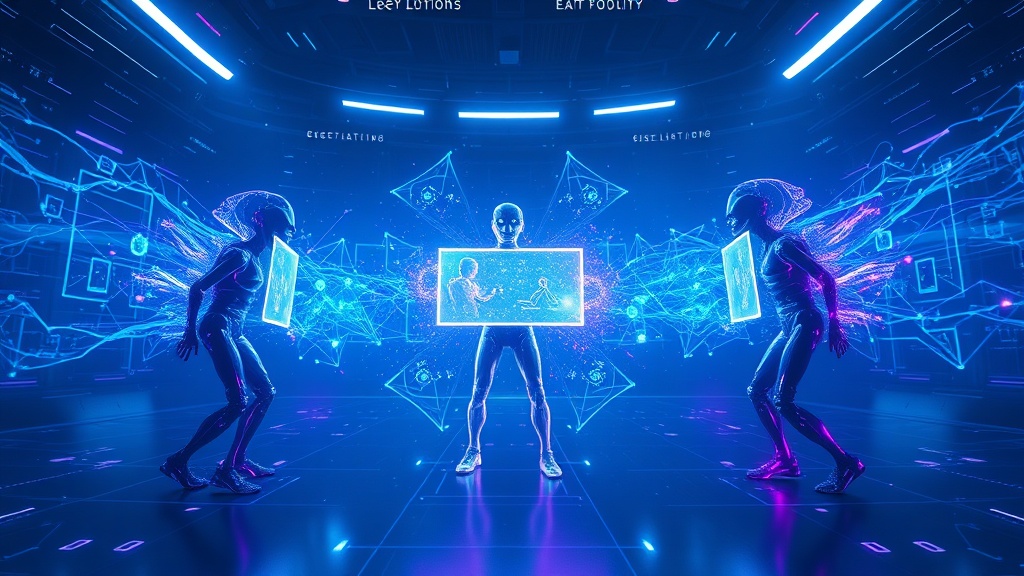
Pika Labs drops 'AI Selves' letting users clone themselves into AI video agents, while Google revamps its creative suite and Grok's video model quietly tops the leaderboard. March 7, 2026 might be the most chaotic day in generative video history.
It's barely noon and the AI video space has already had three seismic announcements. Pika Labs launched AI Selves — a feature that turns you into an AI-generated video persona. Google Labs overhauled its entire creative interface. And Grok's image-to-video model just took the number one spot on the AI video leaderboard. Here's everything you need to know.
Pika AI Selves: Your Digital Clone Is Here
Pika Labs just dropped what many are calling the most significant AI video feature since autonomous agents went mainstream. Pika AI Selves doesn't just generate video — it generates you in video.
The concept is straightforward but the implications are massive: upload reference material of yourself, and Pika creates a persistent AI video avatar that moves, speaks, and reacts like you. It's not a deepfake. It's not a static avatar. It's a fully controllable digital extension of your identity that can be deployed across video content at scale.
The reaction from creators has been immediate and enthusiastic. What makes AI Selves different from previous avatar tools is the integration with Pika's existing text-to-video and motion control pipeline. You're not locked into a talking-head format — your AI self can appear in cinematic scenes, product demos, explainer videos, and social content.
For solo creators and small marketing teams, this is a potential game-changer. Instead of spending hours in front of a camera or hiring actors, you can generate personalized video content featuring yourself in minutes. The UGC advertising space is already buzzing about the possibilities.
The convergence of AI Selves with automated ad engines is obvious — and a little terrifying. Imagine an AI system that creates, tests, and scales short-form ads featuring your face around the clock. That future arrived today.
Google Fires Back With a Complete Creative Suite Overhaul
Google clearly didn't want Pika stealing the entire news cycle. Google Labs announced a major redesign of its AI creative tools, bringing image generation front and center while adding granular control over assets and outputs.
The redesign isn't just cosmetic. Google is positioning its suite as a unified creative workspace where image generation, video creation, and asset management live under one roof. The emphasis on "more precise control" signals Google's response to the common criticism that its AI tools produce impressive but hard-to-direct results.
But the bigger Google news might be what's happening inside NotebookLM. The research tool can now transform any knowledge source — documents, notes, articles — into cinematic video explainers. Powered by Gemini 3 and Google's latest Veo video models, it's a direct pipeline from text research to polished video content.
This is a strategic move that targets a completely different use case than Pika. Where Pika AI Selves is about personal branding and marketing content, NotebookLM's video feature is aimed at educators, researchers, and knowledge workers who need to communicate complex ideas visually. The fact that it can pull from existing knowledge sources and automatically structure a cinematic explainer removes the biggest friction point in educational video production.
Grok Quietly Takes the AI Video Crown
While Pika and Google traded headlines, xAI's Grok video model has been climbing the leaderboard with less fanfare — and just hit the top spot.
With a score of 1406, Grok's image-to-video model now leads the competition ahead of Google's Veo models and other major systems. The ranking is based on standardized benchmarks that evaluate motion coherence, prompt adherence, visual quality, and temporal consistency.
This is notable because Grok entered the generative video space much later than competitors like Runway, Pika, and Google. Jumping to the number one position this quickly suggests xAI has been investing heavily in video generation capabilities, likely leveraging the massive compute infrastructure they've built for their language models.
The Kling Motion Control Workflow That's Going Viral
Amidst the major platform announcements, a clever workflow hack is making the rounds among AI video creators. The technique combines Nano Banana Pro for photorealistic image generation with Kling's Motion Control feature to create viral-style video content in a fraction of the usual time.
The workflow is simple: generate a high-quality static image with the style and composition you want, then use Kling's motion controls to animate it with specific movements. This two-step approach gives creators more control over the final output than a single text-to-video prompt, because you can perfect the visual before adding motion.
This kind of multi-tool workflow is becoming the norm for professional AI video creators. Rather than relying on a single platform, the best results come from chaining specialized tools together — image generators for visual quality, motion models for animation, and platforms like VO3 AI powered by Veo3 for high-fidelity cinematic output.
Here's an example of the kind of polished, prompt-driven video that modern AI tools can produce:
Generated with VO3 AI — Dynamic podcast studio two-host conversation for show promos
What This All Means for Creators and Marketers
Today's announcements reveal three distinct battlefronts in AI video:
1. Personalization is the new frontier. Pika AI Selves signals that the industry is moving beyond generic AI video toward content that features real people — or at least convincing digital versions of them. Expect every major platform to ship similar features within months.
2. The workflow is fragmenting. There's no single tool that does everything best. The creators getting the best results are combining multiple platforms — image generators, motion control tools, and video synthesis engines — into custom pipelines. Knowing which tool to use for which step is becoming a core creative skill.
3. Enterprise use cases are exploding. Google's NotebookLM-to-video pipeline, automated UGC ad engines, and AI avatar systems are all enterprise plays. The market for AI video is rapidly shifting from "cool demos on Twitter" to "production infrastructure for businesses."
Generated with VO3 AI — Serene mountain sunrise yoga for wellness brand marketing
Practical Takeaways
- If you're a solo creator: Start experimenting with AI avatar tools now. Pika AI Selves and similar features will define personal brand content in 2026.
- If you're in marketing: The multi-tool workflow approach (image generation → motion control → video synthesis) produces significantly better results than single-prompt generation. Build your pipeline.
- If you're in education or knowledge work: Google's NotebookLM video feature is worth testing immediately. Turning research into visual explainers with zero video editing skill is a massive productivity unlock.
- If you're evaluating platforms: Don't sleep on Grok's video capabilities. The leaderboard position suggests serious quality, and xAI tends to price aggressively.
Try It Yourself
Want to see what AI-powered video generation can do for your content? VO3 AI lets you create cinematic, high-quality videos from text prompts using Google's Veo3 model. Whether you're producing marketing content, social media clips, or brand videos, you can go from idea to finished video in minutes.
Head to vo3ai.com to generate your first AI video — no video editing experience required.
Ready to Create Your First AI Video?
Join thousands of creators worldwide using VO3 AI Video Generator to transform their ideas into stunning videos.
📚 Related Posts:
What is VO3 AI Video Generator: The Ultimate AI-Powered Video Creation Platform
Discover VO3 AI Video Generator - the revolutionary AI video creation platform
Read More →VO3 AI vs. Veo3 — What's the Difference?
Understand the key differences between VO3 AI and Google's Veo3
Read More →How to Use VO3 AI Video Generator: Complete Guide
Master VO3 AI Video Generator with our comprehensive tutorial
Read More →VO3 AI Video Generator - Where imagination meets innovation
Built on top of multiple AI video models including Veo3. Start your creative journey today and join the future of video creation.